
AI Virtual Staging Ideas: Make Empty and Dated Rooms Irresistible
Empty listings photograph cold. Dated rooms look tired. See how realtors use RealtorForge AI to generate room-by-room staging ideas that get offers.
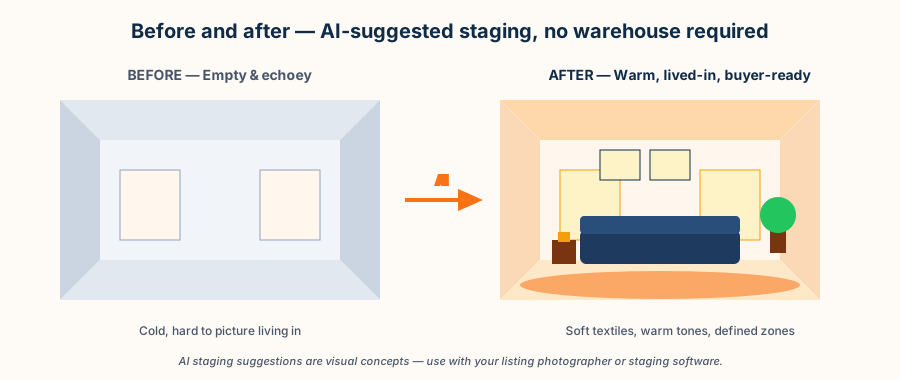
An empty house is a cold photograph. A dated house is a tired one. Either way, buyers scroll past.
Staging fixes this — but traditional staging is slow, expensive, and logistically painful, especially on vacant listings in small markets. That's why about two out of three residential listings still go up partially or fully unstaged, and the photos show it.
RealtorForge doesn't replace your stager or your staging software. It does something simpler and more useful: it looks at your actual listing photos and generates a room-by-room plan — furniture, color palette, textiles, lighting, accessories, even camera angles — that you or your vendor can execute.
Think of it as a creative director for every listing, for free, in five minutes.
Why unstaged rooms cost you offers
Three things buyers can't do with an empty or cluttered photograph:
- Picture the scale. Without furniture, a 14×16 living room looks like a 10×12 or a 20×22 — nobody can tell. Buyers assume small until proven otherwise.
- Picture a life. A reading corner, a dining moment, a kids' play area — these are the emotional hooks. Empty photos have none.
- Move on from the wallpaper. One dated feature (teal kitchen, faux-finish walls, popcorn ceiling) dominates the frame. Staging redirects the eye.
Research from RESA (the Real Estate Staging Association) consistently shows staged listings sell faster and closer to — or above — list price. The hard part for agents has always been making staging actually happen.
What AI staging produces from your photos
Feed the AI your listing photos. It returns:
1. A "staging direction" per room. A paragraph describing the intended mood, palette, and lifestyle cue.
2. A furniture checklist. Specific pieces with scale notes ("84-inch low-profile sofa, not sectional; room is 13×17").
3. A palette card. Three to five colors with hex codes for the stager, plus natural-light notes based on window orientation.
4. Accessory ideas. Pillows, rugs, lamps, plants, art — the stuff that makes a room feel lived in without feeling personal.
5. Photography angles. Where the photographer should stand to make the staged space read biggest.
6. Cost tiers. A "rent it," "buy it cheap," and "style it from seller's existing stuff" version for different budgets.
Seven rooms, seven staging directions the AI gets right
The AI is trained on thousands of listing photos and what sold in what market. Here's how it thinks through the seven rooms buyers judge hardest.
Living room
Goal: one clear conversation zone, visibly sized.
Look for the longest sightline; orient the sofa perpendicular to it. Rug anchors the zone and extends under the front legs of the sofa and chairs. One dominant warm tone (terracotta, mustard, rust) plus one cool accent. Art hangs at 57–60 inches to center, not ceiling.
Kitchen
Goal: suggest cooking without clutter.
Three items on the counter, max: a wooden board, a bowl of fruit, a small plant. Clear everything else. If countertops are the highlight, style them; if the countertops are the weakness, redirect the eye with a statement pendant photo.
Primary bedroom
Goal: hotel-calm, not personal.
King or queen pulled to the wall with the widest unbroken sightline. Two symmetric nightstands with matched lamps. Neutral linen bedding plus one textured throw. No religious imagery, no family photos, no pets in frame.
Primary bathroom
Goal: spa.
Fresh white towels (rolled, not hanging). One plant. One candle. Mirror clean. Shower door spotless. If tile is the hero, shoot low and tight.
Secondary bedrooms
Goal: suggest a life, not the life.
If a kid's room, staged as either kid OR guest — not both (it confuses the buyer). If a home office, a real desk plus one chair plus a shelf; no overflowing paper.
Dining room
Goal: "last Thanksgiving we could've had here."
A table set for four with simple plates, a runner, and a centerpiece (greenery > flowers, because photos date faster with florals). Pendant centered over the table.
Backyard / patio
Goal: the highest-ROI shot in many markets.
One seating vignette (two chairs and a side table beats four chairs sprawled). A single planter. A plated drink or coffee cup adds "life" without people. Shoot golden hour if at all possible; the AI tells you when that is for your zip code.
Three staging budgets the AI plans for
Virtual-only staging ($50–$200 per room). The AI's output goes straight into a virtual-staging tool (BoxBrownie, VirtualStagingAI, ApplyDesign, etc.). Photos get furniture added digitally. Disclose "virtually staged" in captions.
Light physical staging ($500–$1,500 total). Seller keeps most of their furniture; you or a stager bring in 6–10 accent pieces (rug, throws, plants, art, lamps). The AI lists exactly what to bring, sized to the room.
Full physical staging ($2,000–$6,000 per listing). A professional stager brings everything. The AI's output becomes a brief for the stager — room-by-room directions save hours of walk-through and back-and-forth.
A walkthrough example
Here's the kind of output the AI returns for a single room — the empty living room you saw in the illustration above.
Direction: warm, family-forward, with a clean modern edge. Lean into the west-facing light; photograph late afternoon.
Palette: #FFF7ED warm white walls (existing), #F97316 terracotta accent, #1E3A5F navy anchor, #78350F walnut wood tones, a touch of #22C55E greenery.
Furniture:
- 84" low-profile sofa, navy upholstery, placed along the east wall facing fireplace
- Two rattan lounge chairs at 45° flanking the fireplace
- 8×10 terracotta-and-cream flat-weave rug under front legs of all three pieces
- Walnut coffee table, oval (softens the right-angle geometry)
- Pair of small brass floor lamps at the chairs
Accessories:
- Cream + terracotta lumbar pillows on sofa (4 max)
- Fiddle-leaf fig or bird-of-paradise, 5–6 ft tall, corner by window
- Framed abstract landscape above fireplace, 36×48
- Woven throw draped on one chair
- Ceramic bowl with citrus on coffee table
Photography: shoot from the doorway on the west side, wide lens (24mm full-frame equivalent), tripod at 42-inch height, 4 pm late-afternoon light.
Budget tier: Light physical staging. Estimated cost: $450 for accessories + 2 hours of styling.
That's one room. The AI produces the same level of detail for every room in the listing.
Where AI staging shines (and where humans still win)
The AI is great at:
- Describing what a room could look like, in specific, actionable language
- Catching scale and orientation mistakes before they become bad photos
- Keeping a consistent palette across a whole house
- Working fast enough to matter for the tight timeline of a live listing
Humans still win on:
- Actually moving furniture
- Reading a seller's personality and what they'll tolerate
- Negotiating with a reluctant homeowner about the teal accent wall
- Last-minute on-site adjustments for weird light
Use the AI for the brief, a human for the execution. Neither alone beats the combo.
How this connects to the rest of the listing campaign
Better staging photos make better everything else — social posts pop harder, email click-through climbs, video reels look intentional, and the landing page feels premium. It's the quiet leverage point that lifts the whole listing campaign.
And since the staging directions live alongside the description, social posts, and video script in RealtorForge, everything cross-references. The description mentions the "west-facing great room" that your staging plan emphasizes. The video starts in the same corner the staging sets up. Consistency is the mark of a listing that sells.
FAQ
Is virtual staging ethical?
Yes, if you disclose. Every virtual-staging tool (and the MLSs) require a "virtually staged" caption on modified photos. RealtorForge auto-labels for you.
Can the AI generate the staged photos directly?
It hands off to virtual-staging image tools cleanly (BoxBrownie, VirtualStagingAI, ApplyDesign) and can also output a direct staged preview in-app for quick seller buy-in.
What if my seller doesn't want to move anything?
The AI generates a "style with what's there" tier — small accessory moves only, keeping existing furniture. It's always an option.
Does staging actually help sale price?
Data from RESA and other industry sources consistently shows staged listings sell faster and closer to list. Magnitude varies by market; the direction is consistent.
Ready to stop shooting empty rooms? Generate staging ideas for your next listing →
Sources
- National Association of REALTORS® — The Code of Ethics (Article 12 — truthful, non-misleading advertising; disclose staging)
- National Association of REALTORS® — Handbook on Multiple Listing Policy (MLS rules on image accuracy and staging disclosure — rules vary locally)
- HUD — Housing Discrimination Under the Fair Housing Act (fair-housing limits on how a home is depicted)
- Meta for Business — About Special Ad Categories (housing, employment, credit) (a staged photo boosted as a housing ad falls under Special Ad Categories)
Related reading